Educating Sommeliers Worldwide.
By Beverage Trade Network
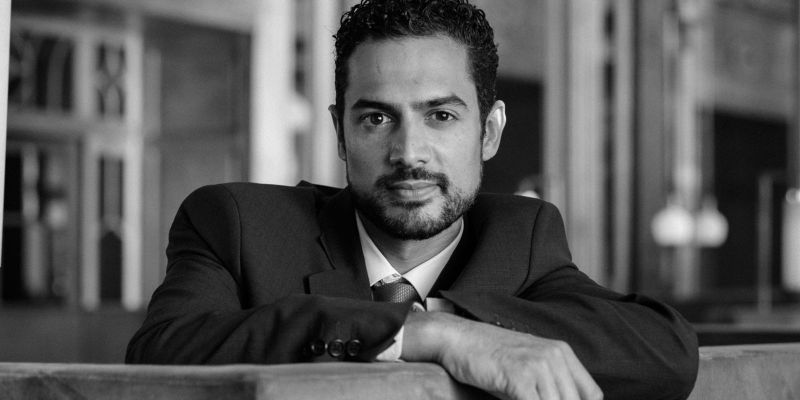
Wine education is evolving beyond appellations, grape varieties, and blind tasting. Today’s sommeliers are expected to combine deep technical knowledge with communication, service, commercial awareness, and the ability to translate complexity into something meaningful for the guest. Few professionals understand that progression better than Réza Nahaboo, MS. His career has moved across restaurant floors, international sommelier competitions, and increasingly, the classroom, where he now helps shape the next generation of hospitality professionals as a Lecturer in Practical Arts at EHL.
Nahaboo’s own journey has been defined by continuous learning. From being named Best Sommelier of Switzerland and competing on the international stage to eventually achieving the Master Sommelier title, he has experienced first-hand the discipline, repetition, and critical thinking required to develop at the highest level. In this conversation, he discusses what effective wine education should look like today, the balance between theory and practical experience, the importance of mentorship and service, and how technology, commercial knowledge, and changing guest expectations are reshaping the skills future sommeliers will need.
It hasn’t necessarily changed my perspective. For a long time now, I’ve believed that a "great" sommelier is someone who can truly create an emotional experience for the guest through beautiful service, a memorable moment that the client will carry with them simply because of that connection and encounter with the sommelier. For me, it’s always been rooted in fundamental qualities like being attentive, humble, available, and ready to share.
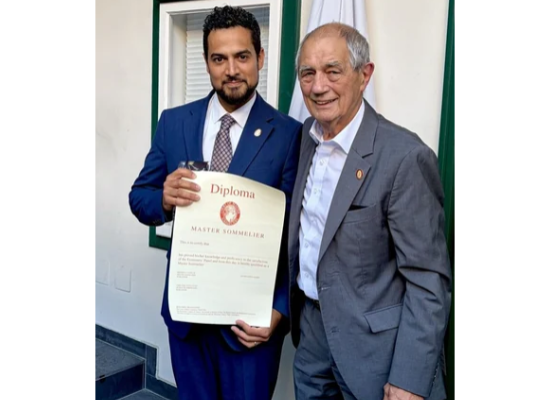
Source: Réza Nahaboo MS
It’s quite difficult to take a position on this question, because it’s really tied to each person’s life. When you want to stay on this path of learning, you must do it in a way that fits your own life opportunities, finding the right ways to balance things out. You need to achieve at the end; then you also must consider that there’s really no room for excuses. I mean, I did it with two kids, with very demanding schedules every day, and a tight budget, let’s say. And that’s how it is: you just can’t give yourself excuses or look for exits; you have to really commit and go after the result at all costs. And above all, you must be patient and learn from your failures.
At the Lausanne school, the students we're training aren’t necessarily there to become sommeliers or maître d’hôtel, but to aim for more strategic roles in the future, whether in hospitality or other sectors. Obviously, that means there are significant management aspects on the horizon, and the EHL has a great deal of experience over many years with what we call “learning by doing.” Beyond just learning the technical side, they’re also taught the human and behavioral values linked to service professions. Everything is filtered, measured, and studied so that the content is high quality and fits the needs not of future sommeliers, but of future managers.
You must realize that the sommelier profession is demanding and, in a way, thankless. While the clientele often sees it in a glamorous light- you know, presenting great wines, tasting, discussing aromas- in reality, you must consider that it's a job with very heavy workloads in terms of hours. The clients are more demanding than if they were just going to see a doctor or a baker. Human behavior in a restaurant is what it is, and you must take all of that into account. So yes, you must understand that it’s a profession with constraints, and it’s not just show business.
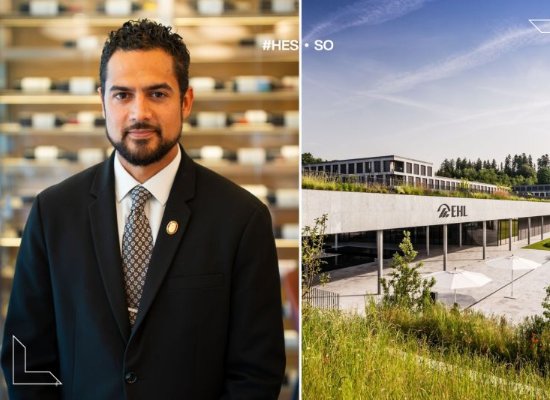
Source: HES-SO
I really like this question; it resonates a lot with me. Of course, to answer directly, you do need a minimum of technique and knowledge to have good discernment and be able to communicate. But it’s clear that today, a customer will remember someone who gave them a pleasant moment with a certain simplicity, even if they made mistakes, more than they’ll remember someone who just recited the entire history of a château. It’s important to understand that sometimes restaurants can feel intimidating, and we must ask whether that still matches how people want to enjoy things today. The environment we offer might not always be what they’re looking for. So clearly, it’s crucial to center future training around the idea that customers want to meet a person, a personality, rather than just being on the receiving end of pure technical knowledge. And yes, that’s important.
In my current work, as I mentioned before, the students aren’t pure sommeliers but future elite managers who will be managing companies in the future, whether in hospitality or other sectors. Wine is taught in a purely analytical and oenological way by other colleagues. I see it more as giving them the apron and hat of a sommelier for a few days so they can understand restaurant organization. In our wine courses, of course, we do tasting, but we don’t go as deep as a traditional sommelier would. Our focus is on giving them broad knowledge rather than specialist.
Absolutely, I completely agree. In my own career, I recently moved away from being a sommelier and spent four years working in a commercial role, which is a completely different job. But I really think it’s absolutely essential to incorporate not just theory, but also the practical, commercial side if you want a full 360-degree understanding of what wine is. A sommelier is often immersed in the storytelling of winemakers and estates, because these places have their own structures and they’re all about promoting and selling their product. The sommelier is kind of the link in that chain. But it’s also interesting to see the other side of the fence, the more economic side for these houses, and to realize that it’s a product, not just the romantic image of a winemaker on a hillside.
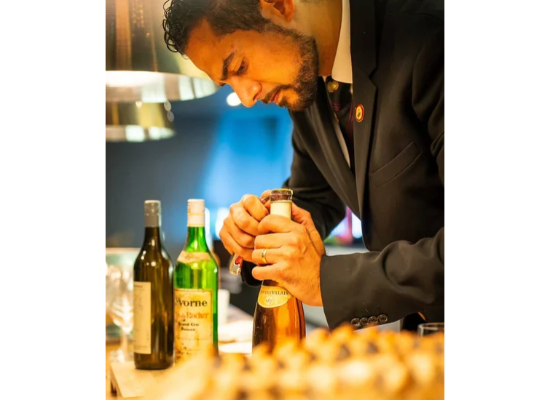
Source: Réza Nahaboo MS
Well, that aspect of service training is inseparable. If we’re really talking about the sommelier profession, if you want to grow in the world of wine, being a sommelier means you’re right there in front of the customer, in a setting like a restaurant, of course. You’re part of the whole theater of the restaurant, with the kitchen teams and everything that goes along with it. And of course, from there, you can branch out into other wine-related areas. But for a sommelier, it’s so important to have that notion of service, because you’re there to make others have a great time. And those values are inseparable: you’re learning how to conduct yourself and how to encourage sales in different scenarios, whether it’s a business setting, a romantic dinner, or for foodies.
As for analytical tasting, it’s done in different sessions to cover light, medium, or full-bodied profiles, but that’s again with my colleagues. It’s more about how to communicate about wine in a commercial sense. In a previous hospitality school, Mr. Basso emphasized the quality and economic aspects so they could understand what made a wine good or not, rather than diving straight into appellations.
There are different aspects because, in fact, it really depends on whether you’re working as a sommelier on the ground. If you're in other structures, it's different again. But if you’re focusing on those aspects, whether it’s CMS, WSET, or ASI programs, these are things that will help you grow your own personal knowledge and give you credibility with clients, your employer, or in the market. You can improve your tasting skills and your theoretical knowledge, and by participating in these certifications, you’ll reach a higher level than where you started.
After that, it’s up to each person to see how they apply it in their job. The more confidence you gain in tasting, the more you can make relevant purchasing decisions for your business, and the more you can share that knowledge with your staff and customers, creating a better customer experience. It’s more about self-improvement. And sometimes, at the Master Sommelier level, no client is going to ask you about the yield per hectare of a particular wine. You do it for yourself, and it brings more prestige to the place where you work
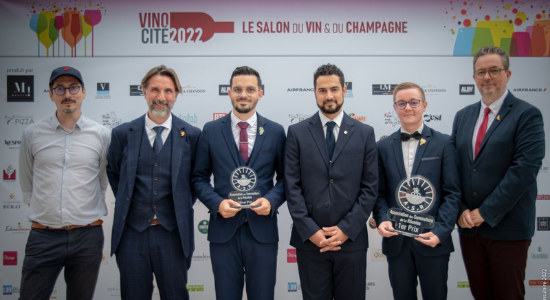
Source: Vinocité
It’s about human skills above all. You need to be able to read your guest, understand who they are, and bring them a bottle of wine that fits them, their moment, their budget, and not lock yourself inside your own persona.
Sure, sometimes there are ‘author’ restaurants where people come specifically for the sommelier and their wine list. But when you’re in a business‑focused restaurant, or in a hotel, you must remember that you’re not choosing wine for yourself, but for the guests. So you also need to develop the commercial side and stay very curious. Curiosity isn’t necessarily a skill, but to me, it’s essential to stay updated and grounded.
[[relatedPurchasesItems-70]]
When you grow within the world of sommellerie and wine, at some point you might think you’re becoming some kind of expert. And that’s exactly what’s interesting to highlight in training: wine knowledge isn’t limited to sommeliers. I’m really thinking about young sommeliers here, since we’re talking about education. You might think you’re becoming erudite. Not at all. As soon as you start touching the international side of wine, the oenological side, the business side, the production side, the marketing side, and so on, you realize you don’t know that much. And in the wine world, what do we really know? Mostly the part with beautiful appellations and prestigious names. But not the volume side, the production side, all of that. It’s quite obscure for a sommelier. You must always stay humble, and in training, try to bring that 360‑degree perspective on all the facets of the profession.
Header Image Source: Vinum
Also Read:
Stephen Towler MS On The Future Of Wine Education And The Modern Sommelier
How Restaurants Can Grow Beverage Sales Without Compromising Hospitality
How Sommeliers Can Tell the Story Behind a Single-Serve Wine—and Capitalize on a Growing Category