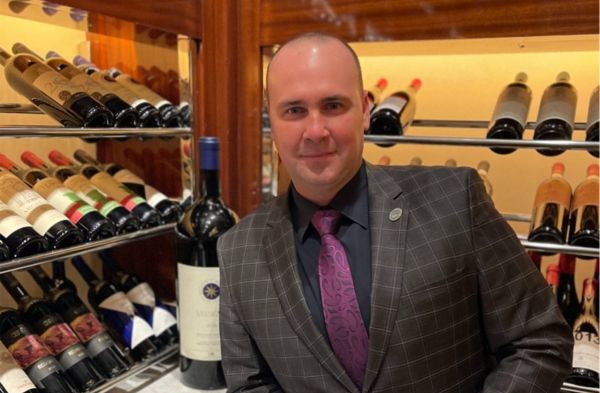
Educating Sommeliers Worldwide.
By Beverage Trade Network
Stephen Towler MS has built his career on the belief that great sommeliers are shaped not only by knowledge but by curiosity, resilience, and an unwavering commitment to hospitality. From the restaurant floor to the classroom, his journey reflects a rare combination of practical service experience, academic excellence, and an enduring passion for developing the next generation of wine professionals. Having recently earned the prestigious Master Sommelier title after years of dedication, Towler continues to inspire aspiring sommeliers through his work in wine education, mentoring, and professional training. As head of the MMI Wine Academy in Dubai, he works closely with hospitality professionals across all stages of their careers, helping transform technical knowledge into practical confidence that enhances guest experiences. His approach to education extends beyond examinations, focusing on communication, critical thinking, commercial awareness, and the ability to make wine both accessible and engaging for consumers. In an industry where guest expectations, global wine regions, and learning methods are constantly evolving, Towler believes that the modern sommelier must be as skilled in education and storytelling as they are in service and blind tasting. In this exclusive interview, Stephen Towler MS shares his insights on the future of wine education, the changing responsibilities of sommeliers, the value of mentorship, and the qualities that will define the industry's next generation of hospitality leaders.
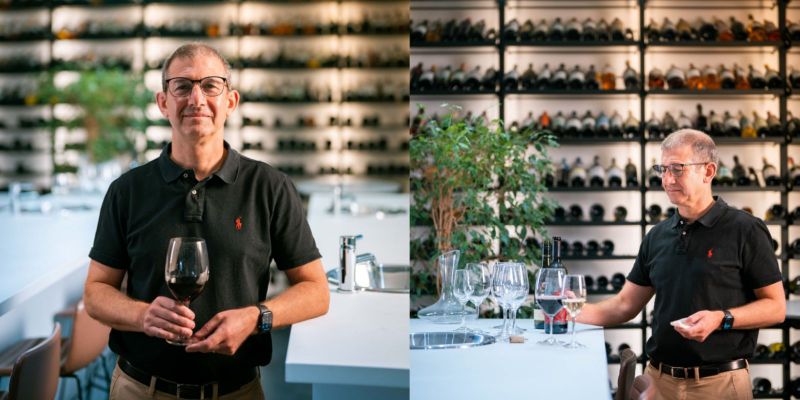
Source: Stephen Towler MS
My approach to learning changed significantly from when I first started the MS journey. After the first few attempts, I realised that I didn’t have the structure needed to reach the required level. I began to reorganise my notes into different formats, both long-form and short-form, recorded as both text and voice notes. I also reached out to other candidates for regular Q&A sessions, which became a vital source of motivation and camaraderie. Overall, as a student, I had to fully commit to immersing myself for as long as it took to get over the line. As a mentor to sommeliers preparing for CMS exams, I try to convey the depth of study they will need to commit to if they want to succeed at the more advanced levels.
If students have a clear idea of the paths open to them, it becomes far less intimidating. Like any long journey, it becomes less daunting when broken down into more manageable staging posts. On the MMI Wine Academy website, we propose a range of educational options, including non-certified introduction to wine tasting sessions, WSET Awards in Wines levels 1-3, and every year we help to facilitate the Court of Master Sommeliers Intro course and Certified exam. The WSET Level 1 is the starting point for formal wine education. A thorough read through of the course specification should put new students’ minds at ease, and it should be made available to them at the outset.
Source: Viberries Social
Wine education forms only part of a Sommelier’s toolbox, but is essential for their role as both buyers and salespeople. Beyond technical wine knowledge, I believe there should be greater emphasis on the ability to read a table, understanding when customers would like to engage in conversation or recognising when they prefer a more discreet service. Emotional intelligence is an underrated asset in hospitality.
In today’s competitive job market, being able to show that you are able to achieve advanced qualifications with either or both of these organisations will give you a distinct advantage when applying for sommelier roles in highly reputed restaurant teams. Once you’re in, the best teams with the best leaders will drive you to realise your full potential. It’s therefore important to make conscious choices about where you work and what it will bring to your development, not making a move based on salary alone.
Choosing a position purely for the higher salary too early in a career. Often working as a lone sommelier without having spent time working under an experienced Head Sommelier in a supportive team, it’s difficult to become a well-rounded professional in these circumstances. Also, be careful not to coast; set yourself goals and strive towards them. Diligent and determined young professionals are easy to spot, and the best companies are always on the lookout for them.
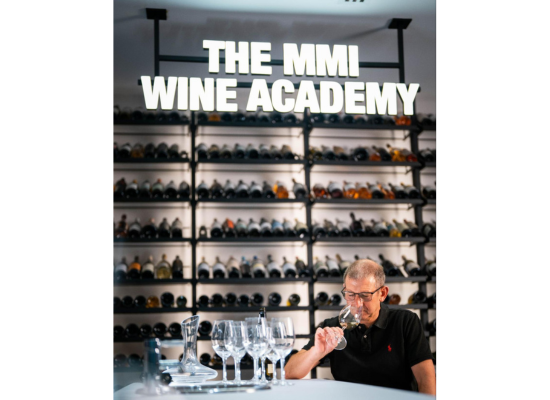
Source: MMI Wine Academy
I’m not sure I’d agree that social media has made anyone more knowledgeable… but facts are more readily accessible to verify, which makes it even more important to be well-informed. I’ve noticed in several restaurants a return to traditional gueridon service. A competent and clean decantation performed in front of the guest should be a skill that any sommelier should possess, and it also provides a little theatre. A system which wasn’t around when I was on the floor is Coravin. Being able to use and maintain one of these is an essential modern-day requirement. Still, the role of the sommelier remains to ensure that the guest has the best possible wine experience along with their meal.
As mentioned before, emotional intelligence goes a long way not just regarding guest service but in relation to being part of a team functioning in a fast-paced, highly pressured environment. Other than that, the colleagues of mine who have gone the furthest have all been able to communicate clearly their ideas and drive through meaningful change. Strong presentation and organisational skills will get you far.
There is now so much information freely available that to a new student, it can appear overwhelming. Depending on a few trusted sources, whether online or in hard copy, will lay the groundwork to build on for a solid education. The CMS study book ‘Sommelier, sales and service for the wine professional’ and the WSET textbooks are a great foundation, but I have found the Guildsomm and Jancis Robinson websites also particularly useful. A fair amount of information is ingrained through note-taking alone, but where AI comes into its own is in the revision. Flashcard apps use algorithms to optimise learning and make the process much more efficient, but it still takes hard work; you can’t take the AI into the exam room after all.
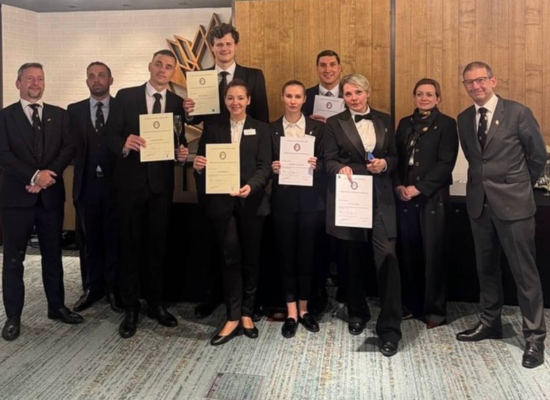
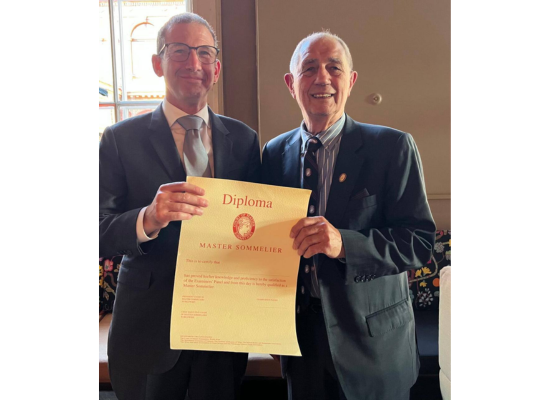
Source: The Court of Master Sommeliers
Both WSET and CMS put significant emphasis on tasting technique for a reason. Maintaining a sharp palate requires regular practice, so having a strong focus on it is justified, particularly when graduates of these diplomas often end up making substantial purchases on behalf of their employers. Is there an imbalance? It depends on which organisation you study with. There are business elements in both course syllabi; however, the aspects CMS covers are more relevant to the daily commercial needs of a sommelier. I thought it was an excellent idea when the business section started to be included in the MS exam. I remember its introduction clearly, and it did catch a few candidates off guard. The service skills sections of the higher-level CMS exams are no cakewalk either.
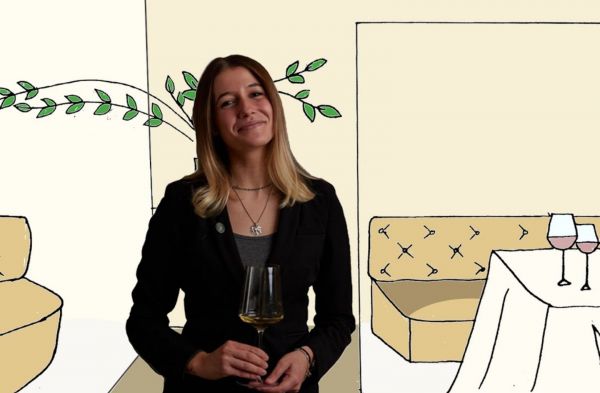
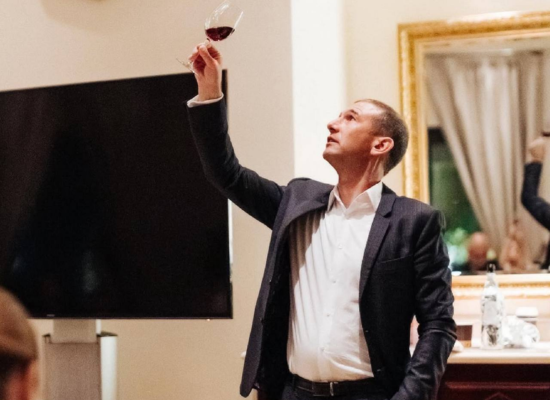
Educators should aim to inspire, motivate, and drive their students whilst being available and accessible to answer questions and give direction. They can guide sommeliers toward information relevant to their level of study and encourage them to study widely; the onus is on the student to work hard to retain the information. You can lead a horse to water, but you can’t make him drink. The world of wine is indeed becoming more diverse, which means that obtaining advanced credentials is ever more vital.
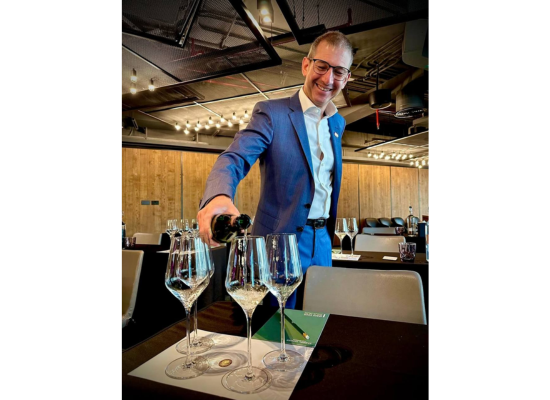
Source: The Court of Master Sommeliers
Hugely important. Time and again in Dubai, we see sommeliers move to the region and try to implement the same wine list that worked for them elsewhere without fully understanding the local market. They then move on, leaving the restaurant with a collection of slow-moving bin ends that were imported specifically at their insistence. A successful sommelier listens to the market. Understanding what customers are looking for and the price points they are comfortable with is essential. Commercial awareness is about building a wine programme that delivers a great guest experience whilst remaining both profitable and sustainable.
The next generation will need, first and foremost, a passion for continuous learning as the coming decades are sure to bring about significant change to the industry. Curiosity and adaptability will be important assets alongside technical and commercial expertise. I would tell all aspiring young sommeliers to knuckle down and gain their qualifications as early as possible. In an environment where competition for jobs is becoming fiercer than ever, having globally recognised certifications on your CV can lead to greater opportunities, as well as help you become a more well-rounded professional. Our role at the MMI Wine Academy is to support you on that journey.
Header image source: MMI Wine Academy
Also Read:
How Restaurants Can Grow Beverage Sales Without Compromising Hospitality
How Top Restaurants Choose Wines For Their Wine Lists
Wine & Wellness: Integrating Low-Alcohol, No-Alcohol & Functional Pairings